Websites for tradies.

If you're the tradie people ring when something breaks, or when they're planning a reno, your website is often where they check you out before they call. This guide covers what NSW asks every tradie website to show, plus the things that help a customer pick up the phone.

Updated by John Hoac

A mechanic leaning into the engine bay of a red car in a workshop, beside a painter rolling a deep blue wall

So many tradies in the same few suburbs.

  • 23%

    of registered businesses in Fairfield City are in construction (22.8%).

  • 17%

    is the figure across NSW, for comparison (17.0%).

  • 4,352

    construction businesses are registered in Fairfield City alone, more than in any other industry there.

Registered businesses by industry for Fairfield City in 2025, from the ABS Business Register via economy.id. Registered businesses include sole traders without employees. With that many tradies in the same few suburbs, the small details on your website are what help a customer choose you.

What your website has to show.

In NSW, every ad for building trade work, your website included, has to show three things. Here's how they might look at the bottom of a real tradie website, along with one handy extra.

yourbusiness.com.au

Sam's Plumbing & Gas

  • 01Sam Nguyen, licensee
  • 02Licence 000000C · Plumber, drainer and gasfitter
  • 03Call 0400 000 000
  • 04Check this licence on Service NSW ↗
  1. 01

    Your name

    The licensee's name, or the business name that's registered to the licence.

  2. 02

    Your licence

    Your licence number and the category of work it covers. Advertising residential building work over $5,000 without the right licence is an offence, and specialist work like electrical, plumbing, drainage, gasfitting and air conditioning needs a licence whatever the job is worth.

  3. 03

    Your phone number

    A business number that you or your team answer, and it helps to make it tap-to-call on every page.

  4. 04

    A link to check it

    This one's optional, but handy. The Service NSW licence check lets anyone look you up by name, licence number, ABN or suburb, so a link beside your number lets a customer confirm you're licensed in a few seconds.

From the NSW Government's guide to building trade advertisements, checked October 2026. The rule sits in NSW's home building laws and covers ads in print and online. Sam's Plumbing is a made-up example. Please treat this as general information and confirm the details for your trade with Fair Trading NSW.

Call-out fees and the full price.

If a price on your website is only part of the cost, the NSW guide says the full price needs to be clearly stated too.

This is the one that catches out a lot of “call-outs from $99” banners. If $99 only covers turning up and the job always costs more, the simplest fix is to show the full price for the job, or to advertise a price that really is the whole cost, like a fixed price for a standard service.

It helps with customers as well. People like knowing roughly what they're in for before they ring, and clear prices save you a few calls from people who were only shopping around.

What a good tradie website includes.

Whether you're a builder, electrician, plumber, roofer or landscaper, these are the things customers look for beyond your licence details, and the things that help Google work out what you do and where.

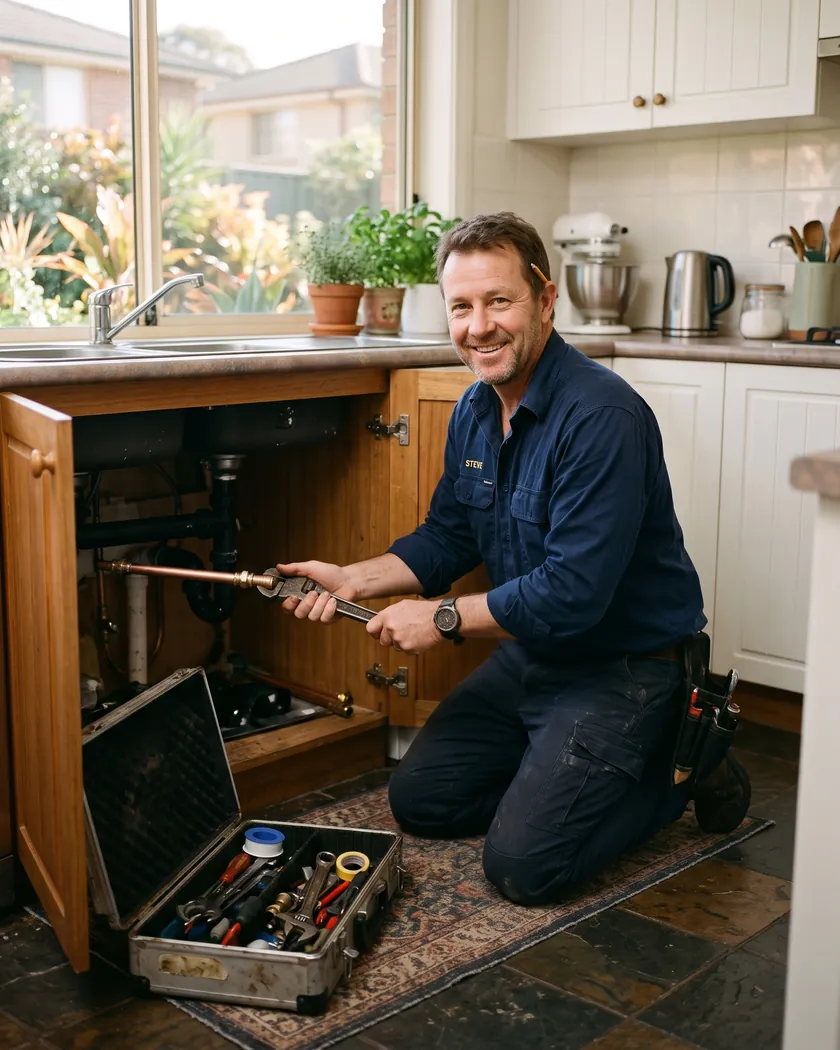
A smiling plumber kneeling at an open kitchen sink cabinet, fitting a pipe with a wrench

A page for each main service

It helps to give each main job its own page, so there's one for hot water, another for blocked drains and so on. That way customers land right on the job they need, and Google can match each page to what people are searching for.

  • Builders
  • Electricians
  • Plumbers
  • Painters
  • Roofers
  • Carpenters
  • Tilers
  • Landscapers
  • Air-con installers
  • Concreters
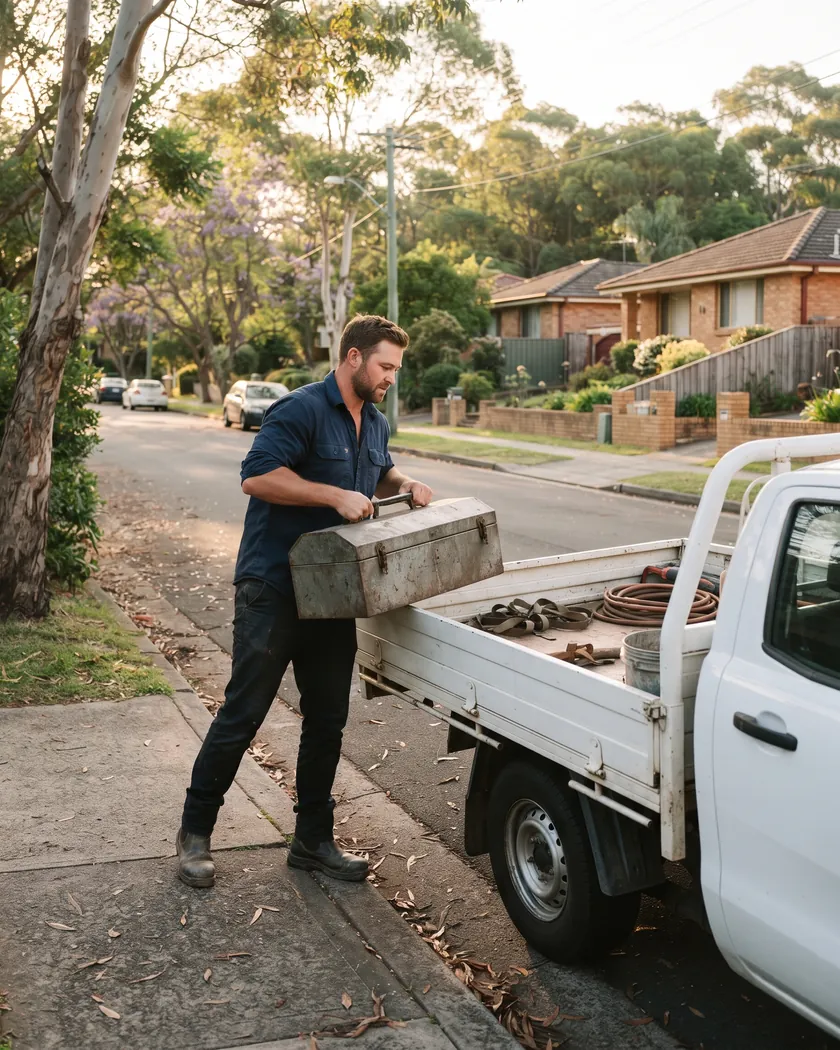
A tradie lifting a toolbox out of his ute on a leafy suburban street

The suburbs you really cover

It's worth listing the areas you're happy to travel to, so people a bit further out know where they stand before they call.

A potter shaping a vase on a wheel in her studio, with finished pots on the shelves behind her

Real photos of your work

Photos of jobs you've actually done go a long way, especially when you mention the suburb and the type of work with each one. There's a bit more on this just below.

A mechanic in blue overalls leaning into the engine bay of a red car

Your licence and insurance

Your licence number and category are best somewhere easy to spot, with a link to the licence check beside them. If you have public liability cover, it's worth mentioning that too.

A smiling woman at a sunny desk with a laptop and her phone beside her

Tap-to-call on every page

Somewhere between 60% and 73% of people now browse or search on a phone, depending on the study, so a tap-to-call button on every page lets people ring you straight from the job site, the car or the couch.

A smiling shop owner arranging mugs on a timber shelf

Reviews from real customers

Your Google reviews can sit right on your website or be linked from it, and it's nice for people to see that you reply to them too.

A woman at a desk thinking over a design on a large screen

An easy way to ask for a quote

A short quote form can ask the same questions you'd normally ask on the phone, like what the job is, which suburb it's in and how soon it's needed.

Photos of jobs you've actually done.

With so many tradies in the same few suburbs, your own work is what helps people choose you. A photo of a real job with the suburb and the type of work written beside it (say, “bathroom renovation, Bossley Park”) gives people a proper look at what you do and where you do it. There's more on the local business mix for Fairfield and Cabramatta.

A quick tip on privacy: it's best to leave out house numbers, number plates and street signs, and to check with your customer before you post photos of their place. Most people are happy to say yes when you ask.

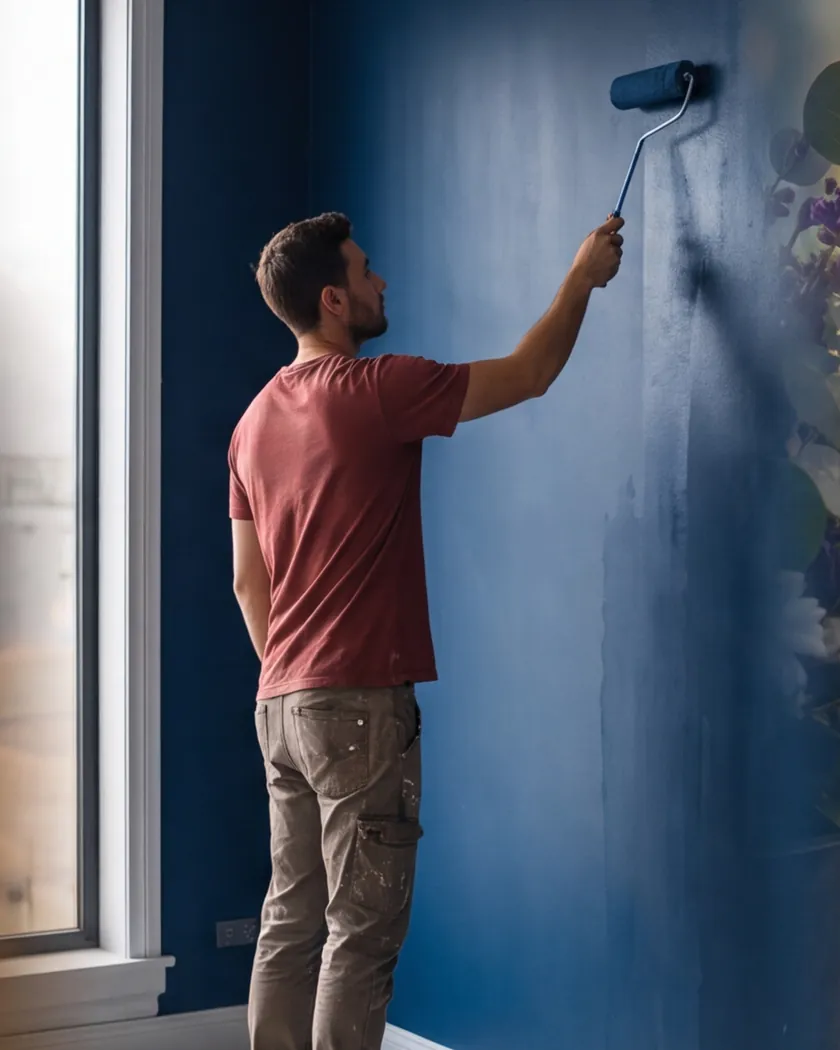
A painter rolling a deep blue wall in an empty room

Getting reviews the honest way.

Reviews only count when real customers write them, and the ACCC takes business-written ones seriously.

In 2020, the Federal Court ordered Service Seeking, an online jobs platform used by tradies, to pay $600,000 in penalties after around 17,000 business-written reviews were published as if customers had written them. The ACCC brought the case.

Hiding or deleting bad reviews can mislead people too. The simplest approach is to ask every happy customer, send them the direct link so it takes a minute, and reply to every review, good or bad.

Is your website really yours?

Plenty of tradie website deals are rentals, where you pay each month and the site switches off when you stop. That can suit some people, and it's good to know what you're signing up for, including what it would cost to leave.

With your .com.au domain, auDA's rules say anyone who registers it on your behalf has to put it in your name. Our domain guide shows how to check yours in a couple of minutes.

A web designer at a timber desk working on a website on a large screen

A page that explains how a job works.

Homeowners worry about contracts, deposits and what happens if something goes wrong. A short page that walks through it answers those questions before they're asked.

  1. A written quote

    Your quote can spell out what's included, what costs extra and how long it stays open.

  2. A written contract over $5,000

    In NSW, residential building work over $5,000 needs a written contract, and Fair Trading has standard contracts you can use.

  3. Home warranty cover over $20,000

    For residential jobs over $20,000 (including GST), Home Building Compensation Fund cover has to be in place before work starts or any deposit is taken. Saying so on your website is reassuring for anyone planning a bigger job.

Insurance details from SIRA and icare, checked October 2026.

A few common questions.

  • Do I need a website if most of my work comes from word of mouth?

    Word of mouth is wonderful, and a website helps it along. When someone gets your name from a neighbour, they'll often look you up before they ring, and a website with your work, your licence and your reviews makes that call an easy one.

  • Should I use a website or a lead app?

    You can use both. Lead apps can bring in jobs while you're paying for them, and those leads stop when the subscription does. Your own website keeps working for you alongside any app you use.

  • Where should my licence number go on my website?

    Somewhere people will see it on every page, like the header or footer, and again on your contact or quote page. A link to the Service NSW licence check beside it lets people confirm it in seconds.

  • What does a tradie website cost?

    With us, it's $2,500 for a complete custom website with up to 8 pages, including GST. That's $500 to get started and the rest when it goes live. Monthly packages then start at $30, month to month with no lock-in. Our guide to website costs covers what others charge too.

  • Can you build a website for my trade?

    We'd love to. We'll ask about the jobs you'd like more of, the suburbs you cover and the questions customers always ask, then shape the website around all of that. The studio is in Smithfield, and we work with businesses across Western Sydney and the rest of Sydney by phone, email and video call.

So how much will it cost?

Most small business websites cost $3,000 to $10,000 (see our website costs guide).

$2,500

is what we charge for your complete custom website, with up to 8 pages.

$500 upfront to get started,

and you only pay the remainder once your website goes live.

See our pricing and monthly packages

Would you like
Dactyl Websites
to build your
website?